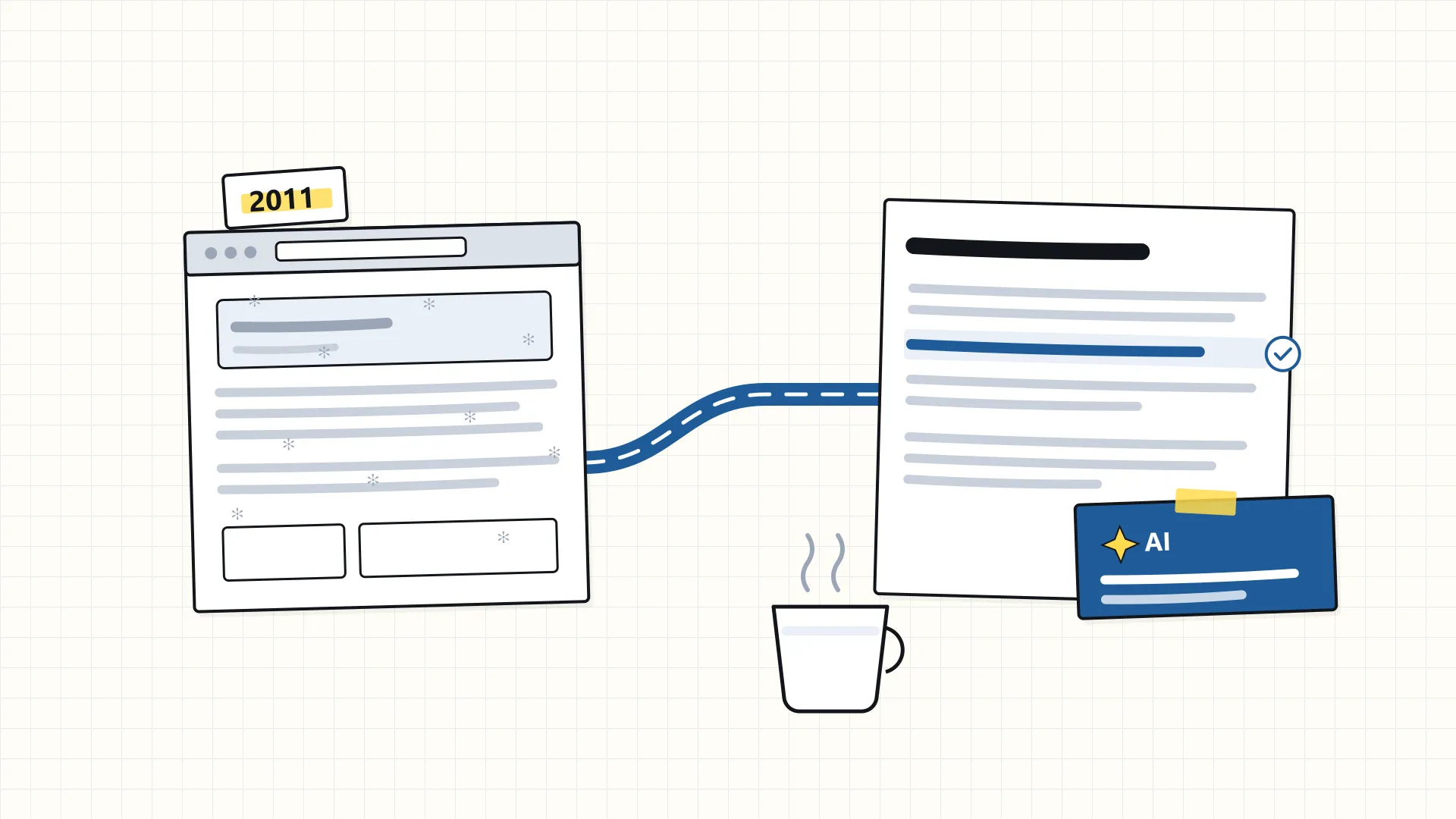
The Crossroads We Thought Would End at 25
We talk about the quarter-life crisis like it has an end date. From what I’ve seen, the unease keeps coming back in different clothes. And often, what we want from others isn’t an answer, but validation.
Baca dalam Bahasa Indonesia →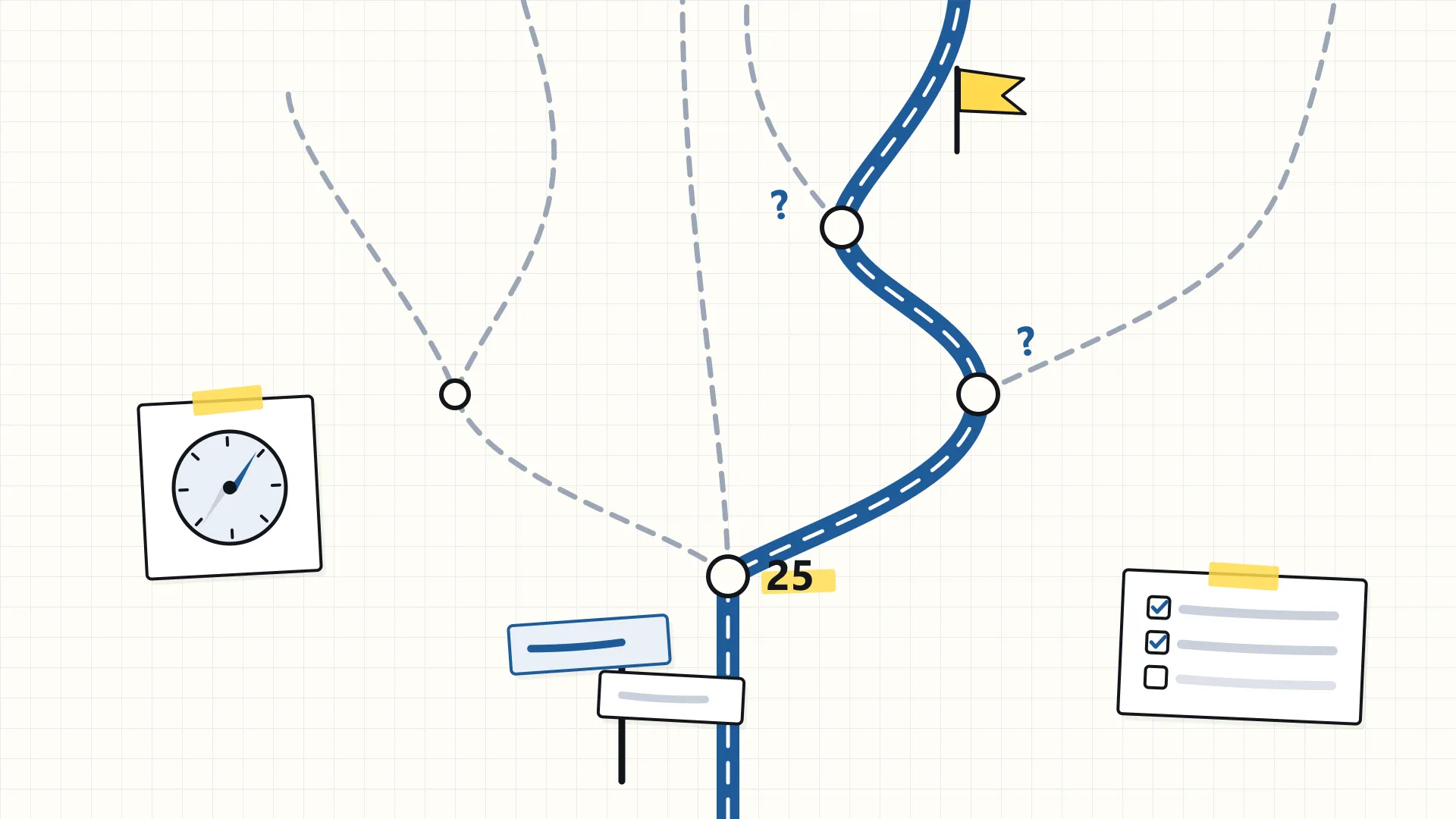
On this page
Right after graduation, a lot of us hit the same question at the same time: so, what now? The structure we had for years is suddenly gone.
Some friends seem to know exactly where they’re going. Others take the first offer that comes. And many of us are somewhere in between, picking something while still wondering if it was the right call.
A Phase With a Name
We even have a name for it. When people reach their mid-twenties and start questioning their direction, their career or the choices they’ve made, we call it a quarter-life crisis.
The name helps, because it tells people they’re not alone. But it also suggests there’s an end date. Get through it, pick a path, and the unease goes away.
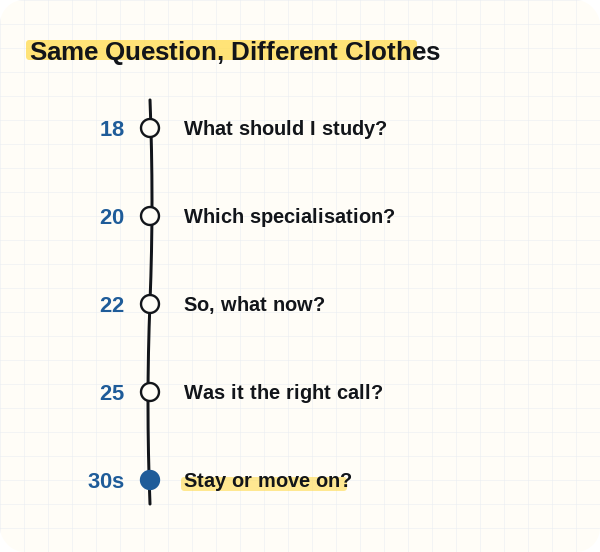
From what I’ve seen, that’s not how it works. The unease comes back, just in different clothes.
Does the Unease Stop After 25?
There seems to be some kind of unease at every stage of life. I’ve had my share of it too.
As I was finishing school, I stood at my first crossroads. For reasons I still can’t explain, I even considered studying English literature instead of IT. Haha, even though I couldn’t speak English at all back then.
At university, it came back: which specialisation should I choose? Grade-wise, I did well in two subjects, networking and programming. You can probably guess from this blog which one I picked.
And it didn’t stop there. As I wrote in another note, I was drawn to working as an internet marketer, because teaching myself had already taken me that far. Or should I keep chasing my goal of running the infrastructure of a big company?
The pattern is similar for a lot of people. After graduating, there’s the question of where to work, whether to do a master’s, and so on. Even after 25, once the questions that left us at a crossroads have been answered, new ones keep arriving.
Should I stay in a stable job or try something new? Should I go deeper into technical work or move into management? Is this still the direction I want, or just the one I’m used to?
The questions change, but that feeling of standing at a crossroads keeps returning. I think that’s normal, and probably healthy. Someone who never questions their direction is either very lucky or not looking very closely.
Passion or Being Realistic?
Among all these questions, one tends to come up most, especially around careers: should you follow your passion, or be realistic? It’s usually framed as two sides, the meaningful path that might not pay, and the practical path that might feel empty.
I’m not sure it’s that clean. For a lot of people, passion isn’t something fully formed, waiting to be found. It grows from doing something long enough to get good at it, and from seeing that the work matters to someone.
And “being realistic” isn’t always as safe as it sounds. A path chosen only for security can turn into its own risk if it slowly drains your energy and stops you from growing.
Looking for Validation
Faced with questions like these, we often go looking for other people’s views. Sometimes, if we’re honest, what we’re really after is validation.
Looking back, we often already have an answer before we ask. And when someone else’s answer doesn’t match ours, the conversation can easily turn into an argument.
Why does that happen? Because everyone answers from their own situation. The experiences they’ve had, their finances, their family’s expectations, where they live and the job market all shape their answer. Advice that fits one person may not fit another.
That doesn’t make other people’s opinions useless. The difference is why we’re asking, for another perspective or just for approval.
So it’s still worth asking the people close to us for their views. Reading a few books on whatever we’re uneasy about can help too.
That way, we end up with plenty of perspectives. And with that variety, it often becomes clearer which ones actually apply to our situation, and which don’t.
In the end, I think the only one who can really settle that unease is ourselves. Other people can give us things to consider, but we’re the ones who know our own limits and priorities.
So, What Can We Do?
If we narrow this down to careers, maybe the thing to weigh is this: with the limits and resources I have right now, whether that’s knowledge, means or anything else, which choice will help me grow and open up more opportunities later on?
Not everything needs a perfect answer. Besides, not every decision is permanent or impossible to undo. You can change roles, learn something new, or go back to something you left.
Some decisions do cost more to undo, and those deserve more care. But if you treat every decision like it defines the rest of your life, it gets almost impossible to choose anything.
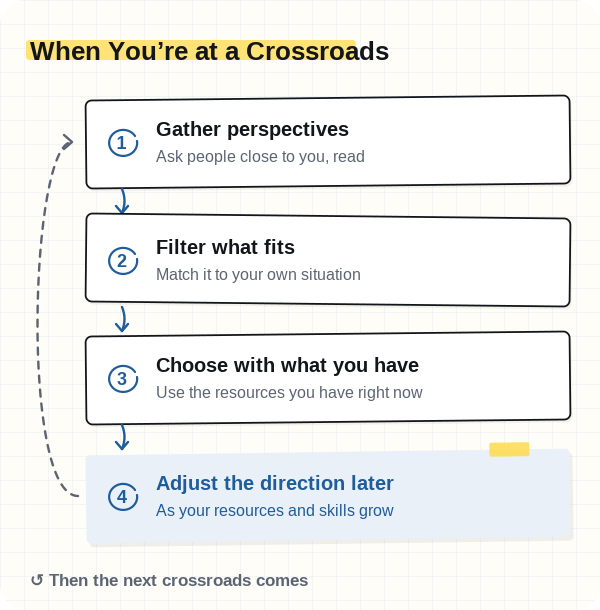
So I think some things just have to be chosen and acted on with whatever we have at the time. Later, as our resources and skills grow, we can still adjust the direction.