The Crossroads That Don’t End at 25
The quarter-life crisis is often treated as a phase that ends. In my observation, the doubt about which path to take keeps coming back, and that is normal.
Baca dalam Bahasa Indonesia →- Updated
- 18 November 2026
- Reading time
- 4 min read
In short
- Doubt about your direction tends to return at different ages, not only at 25.
- Passion versus being realistic is less of a choice than it looks.
- Most career decisions can be adjusted later; avoiding them is what makes change hard.
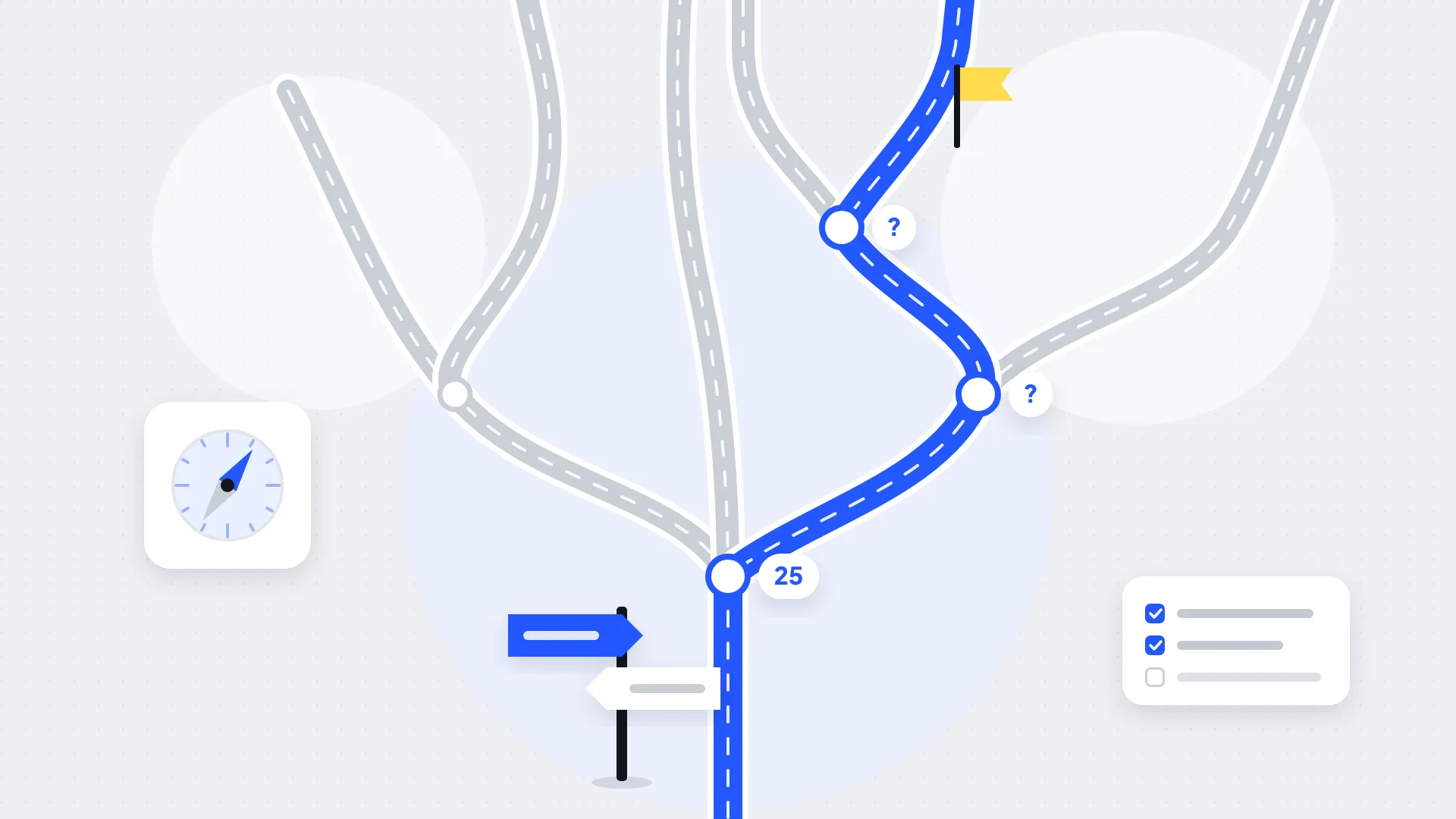
Many of us remember the months after graduation. The structure we had for years suddenly disappears, and the question that used to sit far away arrives all at once: which path should I take?
Some friends seem to know exactly where they are going. Others take the first offer that comes. And many of us are somewhere in between, choosing something while still wondering whether it was the right choice.
We even have a popular name for the period that follows. When people reach their mid-twenties and start questioning their direction, we call it a quarter-life crisis.
The term is useful because it tells people they are not alone. But it also carries a quiet assumption, that this is a phase with an end date. Get through it, settle on a path, and the doubt will go away.
In my observation, that is often not how it works. The doubt tends to come back at different ages and in different forms.
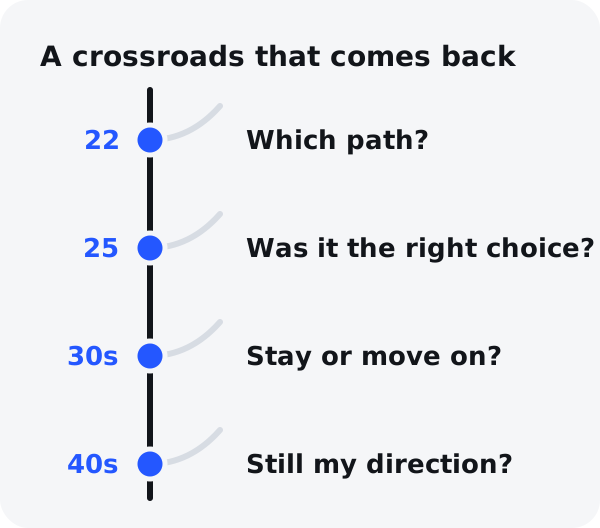
Should I stay in a stable job or try something new? Should I go deeper into technical work or move into management? Is this still the direction I want, or just the one I am used to?
The questions change, but the feeling of standing at a crossroads returns. I think that is normal, and probably healthy. A person who never questions their direction is either very lucky or not looking closely.
The question that often sits at the centre of these moments is whether to follow your passion or to be realistic.
It is usually framed as a choice between two sides: the meaningful path that might not pay, and the practical path that might feel empty. I am not sure the choice is that clean.
For many people, passion is not something fully formed that waits to be discovered. It grows from doing something long enough to become good at it, and from seeing that the work matters to someone.
Someone who did not feel strongly about infrastructure at the start may come to enjoy it once they understand how systems fit together and how much people depend on them.
On the other hand, "being realistic" is not always as safe as it sounds. A path chosen only for security can become its own risk if it slowly drains your energy and stops you from growing.
There are also real constraints that the passion conversation sometimes ignores. Financial responsibility, family expectations, location, and the job market all matter.
Pretending they do not exist is not brave. It is just incomplete. A more useful question might be: within the constraints I actually have, which direction gives me room to grow and keeps more options open?
It also helps to remember that most career decisions are less permanent than they feel. Very few choices are truly one-way doors. You can change roles, learn a new field, or move back to something you left.
What usually makes a change harder is not the decision itself, but the time spent avoiding it. Some decisions do carry a higher cost to reverse, and those deserve more care.
But treating every decision as if it defines the rest of your life makes it almost impossible to choose anything.
So I have started to see the crossroads less as a crisis to get through and more as a recurring checkpoint. Doubt does not automatically mean you are on the wrong path.
Sometimes it means you have outgrown how you were thinking about the path. Sometimes it means something needs to change, but not everything.
The work is to look at the doubt honestly, separate what it is telling you from what fear is adding to it, and then make a decision you can explain to yourself.
I don’t think there is a perfect path waiting to be found. There is the path you choose with the information you have, and the willingness to adjust when you learn more.
That may be less comforting than a clear answer at 25, but it is closer to how most careers actually unfold.